





Biodiversity gain site register
The biodiversity gain site register is a national register of land used for biodiversity gains. The Biodiversity Gain Site (BNG) Register will provide a publicly accessible source of information about off-site gains across England. It will record outputs from the BNG metric tool usually completed by a professional ecologist gather, input and assess data relating to a development site.
Contents |
[edit] What is the BNG register?
The biodiversity gain site register is part of the introduction of biodiversity net gain (BNG) planning regulations, a new law which is part of the government’s Environment Act to ensure wildlife habitats are left in a better state than before a development, and in doing so make a significant contribution to the recovery of nature across the UK.
[edit] What are the BNG services?
Natural England is the Operator of the biodiversity gain site register, on behalf of Defra. The Register is one part of the BNG Service which went live when BNG became mandatory. The Service includes a collection of new digital and other services local planning authorities, developers, landowners, and others will need to be BNG compliant some of which include:
[edit] Allocations
Landowners or developers (with landowner permission) can apply to record an allocation of habitat enhancements to their development.
[edit] Statutory biodiversity credits estimator
Developers can calculate the cost of statutory credits ahead of purchasing them.
[edit] Statutory biodiversity credit sales scheme
Developers can apply to purchase statutory credits. This will become a digital service in the spring of 2024.
[edit] Statutory biodiversity metric calculation tool
The Tool uses a habitat-based approach to assess an area’s value to wildlife and uses habitat features to calculate a biodiversity value. Find out more about the tool and how to download. It provides details on how:
- Ecologists or developers can carry out a biodiversity assessment
- Developers who have commissioned a biodiversity assessment can see the number of biodiversity units a proposed development has and what needs to be done to achieve BNG
- Planning authorities can interpret metric outputs in a planning application
- Landowners or land managers who want to provide biodiversity units from their sites to others can understand the potential of their land
[edit] Related articles on Designing Buildings
- Biodiversity.
- Biodiversity gain.
- Biodiversity in the urban environment.
- Biodiversity offsetting.
- Biophilia.
- Blue-green infrastructure.
- Blue green solutions.
- Designing green and blue roofs.
- Ecological network.
- Ecological impact assessment.
- Ecology.
- Ecology compensation.
- Ecology connectivity.
- Environmental impact assessment.
- Environmental net gain.
- Green infrastructure.
- Green roofs.
- Nature improvement area.
- Natural environment white paper.
- Sustainable development toolkit.
- The future of green infrastructure.
- The sustainability of construction works.
- Water engineering.
Featured articles
Check out some of the best features and news from Designing Buildings as well as key stories from around the web.
Building Safety Regulator, 19 August

Gill Kernick appointed Independent Chair of Residents’ Panel.
Connecting knowledge, technology and conservation
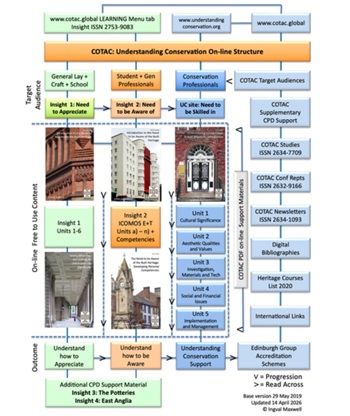
Building competence for the future of built heritage.
Building Regulations and Building Safety Act

CIOB publishes free advice for non-domestic clients.

Building Safety Newsletter from MHCLG.
An extraordinary record of steel engineering worldwide.

Households living near new pylons to save on bills.

ECA warns growth must not outpace grid capacity or skills.
The role of the client and decision making

CIOB response to built environment professions call for evidence.
Construction's sustainability reporting revolution
Tracking upfront embodied carbon with digital tools.
ECA welcomes procurement reforms

Public spending must back British jobs and skills.
Campaigning for Edinburgh: the Cockburn Association 1875-2049
The role of the civic voice in protecting character. Book review.
CIOB photography competition is open for entries.